Showing posts with label stave hill ecological park. Show all posts

Saturday, 1 April 2017

weaving the willow (Knot Garden 2015/2017)


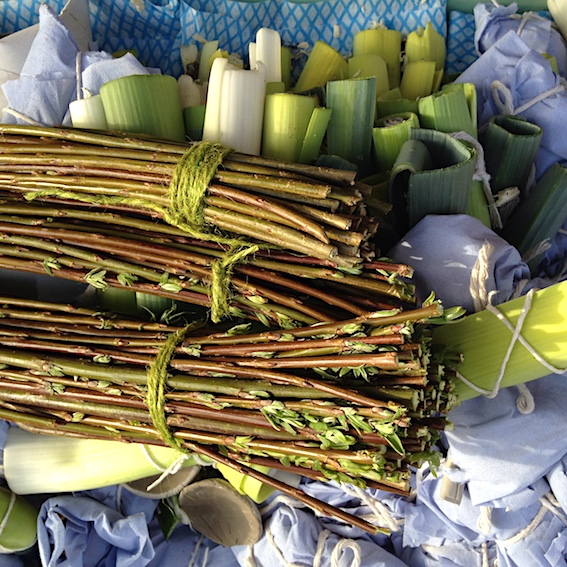
It’s been a couple of years since I wove willow around blackthorn (Prunus spinosa) stumps near the chalk pond at Stave Hill Ecological Park. That summer it looked something like what you see pictured above.

Nettles, garlic mustard and goosegrass were abundant and later on taken by new blackthorn shoots. This year I cut is all these back, ahead of birds nesting in the new thicket, and added freshly cut willow styakes from a pollarded fence nearby to the existing low fedges – see also this post from more info and images.

I might weave a few more stakes before the new spring growth prevents me from doing so and hides the work once again. I’m hoping this time to make a better job of documenting the transformation on the ground in the coming months. Keep you posted… 


Monday, 13 March 2017

second firing (Unearthing project / Stave Hill Ecological Park)


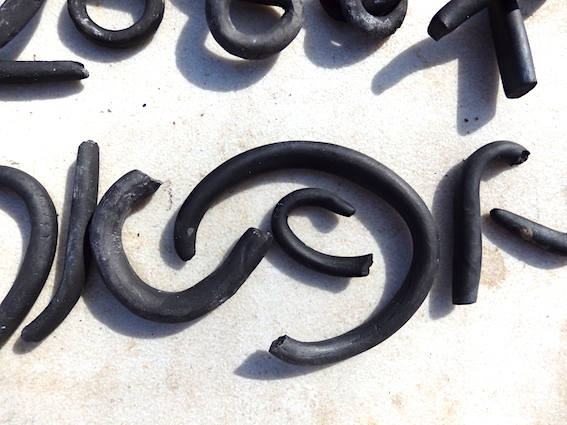
fired clay, with added salt, orange peel, coffee & banana skin added to the pit

various modelled and fired items inspired by found objects on Thames river bed

knots, twists and ties modelled at the last Tate Exchange event

working towards a new taxonomy of...

signs and symbols

scripts and scores

elemental forms

essential knots and connections (unfired London clay)

Sunday, 12 March 2017

first firing (Unearthing project / Stave Hill Ecological Park)


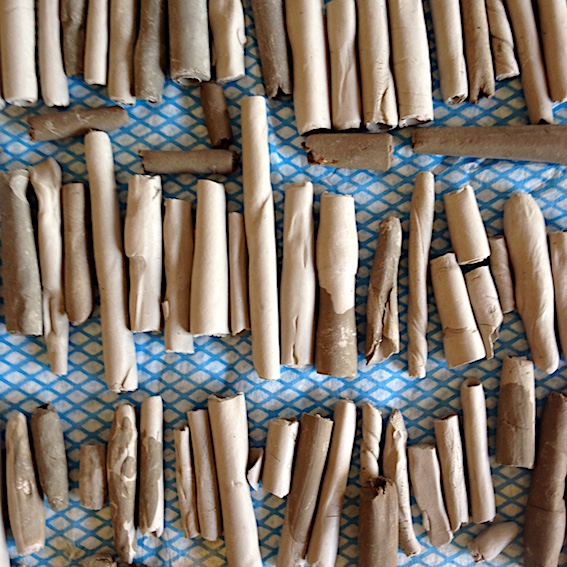
clay pipes ready for firing

clay pipes, mix of london and buff clay

clay knots (see also social bonds) about to be dipped in London clay slip

more clay knots, with rings

clay objects wrapped and stacked in fire pit (with willow for charcoal)

clay pieces unearthed from the pit...


Wednesday, 8 March 2017

Social Bonds (Unearthing project / Tate Exchange)


From discussing 'social justice' last Saturday to 'restoring social bond through communal activity' and our voices this week. Still working with London clay, more objects were made by participants at Tate Exchange in response to these themes, the found objects on the river bed (see previous post) and the clay pieces modelled last weekend.

collection display (part of)

Knots, which recorded dancers moves last Saturday, now became signs and symbols of what connects us all. We all had a great time relating to each other through the process of making and I think the objects did too - see below.

More info on the Unearthing can be found on other posts on this blog as well as this and this link.

beachcombed bounty and clay fragments

early Victorian porcelain and London clay pipes (fragments)

found object and three types of clay

clay knot, pipes and unknown metal object

two chains

knot and hook

clay and ceramic

clay and iron

grey clay

London clay knots

more knots

last ties

Saturday, 25 February 2017

mud to mud (Unearthing project / Walton-on-the-Naze)


I’ve started collecting London clay for Unearthing, a collaborative project with The People’s Bureau at Tate Modern and Stave Hill Ecological Park – see also previous posts.

A few months back we collected clay from the river bed near London Bridge. On this occaskion I collected some in a purer form on the beach at Walton-on-the-Naze, Essex. The Naze is a gorgeous and very unstable landscape, eroded by tidal waters which expose red crag and London clay, that is then reclaimed by the sea.

While collecting small lumps of clay strewn around the beach we came across bricks, yellow in colour, looking like traditional London brick. We also came across wall made from misshapen bricks, most probably rejects from a local brickery. The bricks were being washed out to sea, a 50+ million year old cycle was being looped - clay, shaped into bricks, fired, then becoming clay again... Ecology in action!

I walked back to the studio to process the clay and felt like a complete vandal when I started grating it in order to dry it. We soaked it, sieved it and dried it again, this time on a plaster bat to make plastic clay. 

Once the clay has been modelled, fired and pieces installed, I’ll simply have to walk back to the beach and throw the work in the water... I'm not one to get in the way of nature doing it's thing!